
Can Early-Stage Lung Cancer Be Cured Without Surgery?
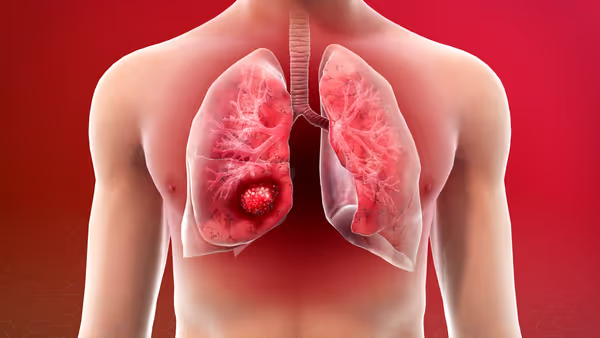
Introduction: A New Era in Lung Cancer Treatment
Receiving a lung cancer diagnosis is overwhelming – but there’s good news for many diagnosed at an early stage: surgery is no longer the only cure-focused option. Thanks to advances in modern oncology, non-surgical treatments for early-stage lung cancer, especially non-small cell lung cancer (NSCLC), have become highly effective.
So, the question arises: Can early-stage lung cancer be cured without surgery?
The answer is increasingly yes, especially for patients who are medically inoperable or prefer non-invasive approaches. In this article, we’ll explore how treatments like Stereotactic Body Radiotherapy (SBRT), targeted therapy, and immunotherapy are changing the landscape of lung cancer care.
Understanding Early-Stage Lung Cancer
Early-stage lung cancer typically refers to stage I or II lung cancer, where the tumor is small and localized, and hasn’t spread to distant areas.
There are two primary types:
- Non-Small Cell Lung Cancer (NSCLC) – ~85% of lung cancer cases
- Small Cell Lung Cancer (SCLC) – More aggressive, often not caught in early stages
For early-stage NSCLC, the standard treatment has long been surgical resection. However, for those unfit for surgery due to age, lung function, or comorbidities, non-surgical options now offer comparable cure rates.
SBRT: A Leading Non-Surgical Cure for Lung Cancer
What is SBRT?
Stereotactic Body Radiotherapy (SBRT), also known as SABR (Stereotactic Ablative Radiotherapy), is a form of highly focused radiation therapy that delivers high doses of radiation to the tumor with millimeter precision.
How SBRT Works:
- Delivers intense radiation in fewer sessions (usually 3–5)
- Targets the tumor precisely while sparing healthy tissue
- Uses advanced imaging and motion tracking to follow the tumor during breathing
SBRT Cure Rates:
According to multiple studies:
- Local control rates exceed 90% for small, peripheral NSCLC tumors
- Comparable overall survival outcomes to surgery in selected patients
SBRT is now considered the standard of care for medically inoperable early-stage NSCLC.
Other Non-Surgical Treatment Options
1. Targeted Therapy
If genetic testing reveals mutations such as EGFR, ALK, or ROS1, targeted therapy can be considered—even in early-stage settings as adjuvant (post-SBRT or chemo) therapy.
- Taken orally
- Targets specific proteins in cancer cells
- Fewer side effects than traditional chemotherapy
These techniques ensure the highest possible dose goes to the tumor with the lowest risk to nearby healthy organs.
2. Immunotherapy
Some early-stage patients may qualify for immunotherapy, especially if the tumor expresses PD-L1 protein.
- Boosts the body's immune system to fight cancer
- Can be used as part of a clinical trial or adjuvant treatment
3. Conventional Radiation Therapy
For patients not suitable for SBRT (e.g., tumors too close to vital organs), conventional external beam radiation remains an option.
Who Is a Candidate for Non-Surgical Treatment?
You may be eligible for non-surgical treatment if:
- You're not a surgical candidate due to health conditions
- You prefer a non-invasive option
- Your cancer has specific biomarkers (EGFR, ALK, etc.)
A thorough evaluation, including lung function tests, PET scans, and biomarker analysis, helps guide the best treatment plan.
Comparing SBRT and Surgery: What the Data Says
| Criteria | SBRT | Surgery |
|---|---|---|
| Invasiveness | Non-invasive | Invasive (open or VATS) |
| Hospital stay | None | 3–7 days |
| Recovery time | Minimal | Weeks |
| Cure rate (Stage I NSCLC) | ~85–90% (in select patients) | ~90–95% |
| Best for | Medically inoperable patients | Fit patients |
SBRT is particularly effective for peripheral tumors and patients with compromised lung function.
FAQs:
Q1. Can early-stage lung cancer be cured without surgery?
Yes, especially in non-small cell lung cancer (NSCLC), treatments like SBRT offer high cure rates without surgery.
Q2. What is SBRT in lung cancer treatment?
SBRT is a precise form of radiation that kills cancer cells with high doses in a few sessions.
Q3. Is SBRT as effective as surgery for lung cancer?
In select early-stage NSCLC cases, SBRT provides similar outcomes to surgery with fewer side effects.
Q4. Are there risks with non-surgical lung cancer treatments?
Side effects exist, like fatigue or local inflammation, but are usually milder than those from surgery.
Q5. Who is not a good candidate for surgery in lung cancer?
Patients with poor lung function, heart conditions, or those who prefer non-invasive options may benefit from alternatives like SBRT.
Q6. Can targeted therapy cure lung cancer?
While not curative alone in early-stage disease, targeted therapies are effective in reducing recurrence post-surgery or SBRT.
Call to Action: Explore Non-Surgical Options with Expert Guidance
If you or a loved one has been diagnosed with early-stage lung cancer, know that surgery is not the only path. Advances like SBRT, targeted therapies, and immunotherapy are transforming the way we treat lung cancer—without incisions or extended recovery.
Dr. Rajeev Kaushal, a globally recognized oncology expert, offers personalized treatment plans including non-surgical lung cancer therapies using advanced techniques like VMAT, IMRT, and SBRT.
Don’t delay. Early action with the right approach can offer a cure—even without surgery.